
Since
the beginning of Dutch navigation to the East Indies in the 1590s,
Netherland's
merchants operated separate trading companies to import spices,
constantly
competing against each other. By 1602 these early companies had welded
themselves into one major body:
Vereenigde
Oost-Indische Compagnie (United East India Company) or just VOC for
short.
States-General
of the Netherlands granted them a 21-year monopoly to carry out
colonial
activities in Asia. It was the second largest multinational corporation
in the
world and the first company to issue stock. It was also the first mega
corporation, possessing huge powers, including their own army, ability
to
wage war, imprison and execute convicts, negotiate treaties, establish
colonies
and coin money.

In
early of the year 1606 the Dutch ship Duyfken encountered and
then charted the shores of Australia’s Cape York Peninsula. The ship
made
landfall at the Pennefather River in the Gulf of Carpentaria and this
was the
first authenticated landing on Australian soil.
For
the first time Australia appeared on the map.

We
don’t know if they brought or left any coins, but I hope that
the captain of the ship Willem Janszoon, as the proper tourist, threw
some coin
in the water just for the good luck. So, what would that be? Probably
nothing
of great monetary value, perhaps some sentimental piece like this
medallic
token (purely my wishful thinking) :
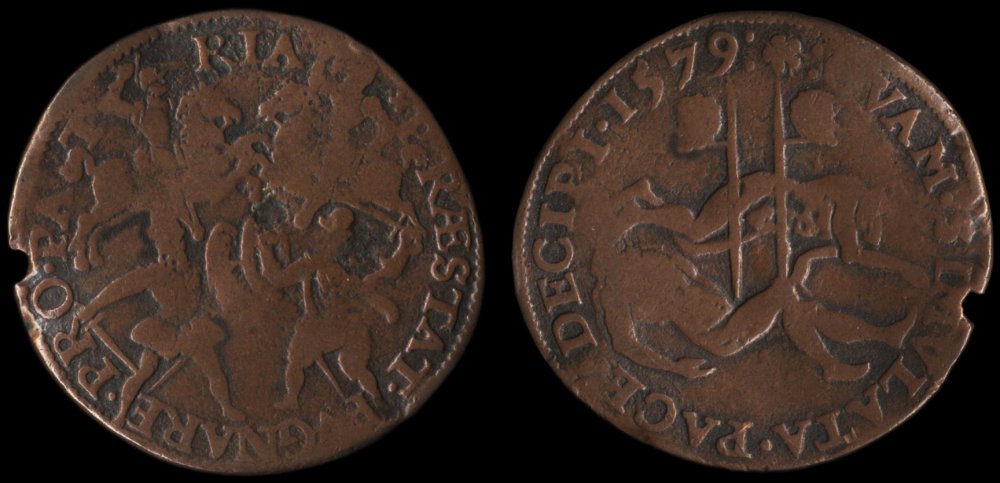
Minted
in Dordrecht in 1579, so called “Rejection of peace”
On
obverse is Spanish cavalry and foot soldier fighting with Dutch
cavalry and foot soldier.
Reverse
shows, beheaded bodies of the Dutch national heroes, counts
Egmont and Horne lying on the ground, their heads on a pike.
Token
was minted to lift up a fighting spirit of the Dutch people
against an oppressive rule of Philip II. of Spain.

The
next ship was also Dutch. On 4. of June 1629 the ship Batavia struck
Morning Reef near Beacon Island off the Western Australian coast. This
time, we
know for sure it brought some coins.
In
total 9 129 coins were recovered from which 71% of Dutch
origin.
Let’s
have a look at some of them:
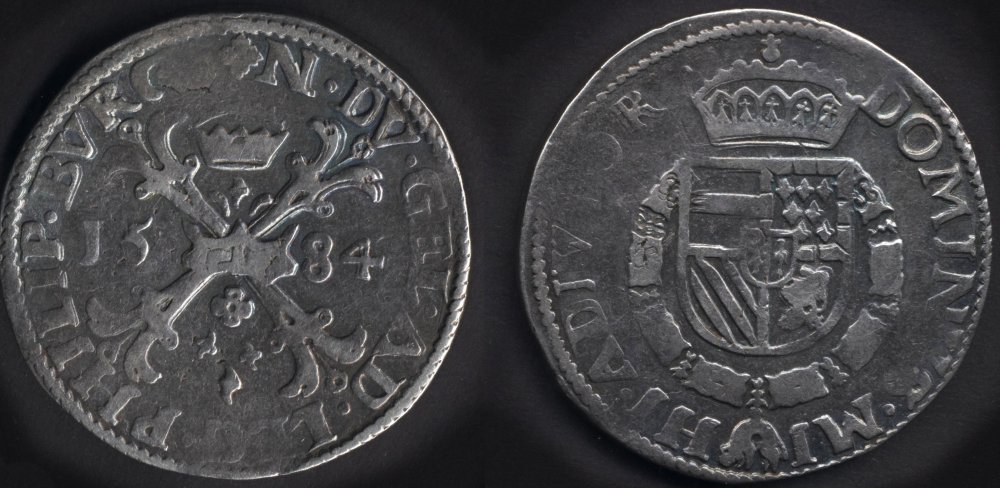
Kruisrijksdaalder
also called Burgundian rijksdaalder, still with
the title of Philip II. of Spain.

Rijksdaalders
from united Netherlands. The Rijksdaalder (Dutch,
"national dollar") was a coin first issued by the Republic of the
Seven United Netherlands in the late 16th century during the Dutch
Revolt.
Featuring an armoured half bust of the William the Silent, Rijksdaalder
was
minted to the Saxon Reichs Thaler weight standard - 448 grains of .885
fine
silver, equal to 48 stuivers; Friesland, Gelderland, Holland, Kampen, Overijssel ,
Utrecht, West
Friesland, Zeeland, and Zwolle minted armoured half bust Rijksdaalders
until
the end of the 17th century.
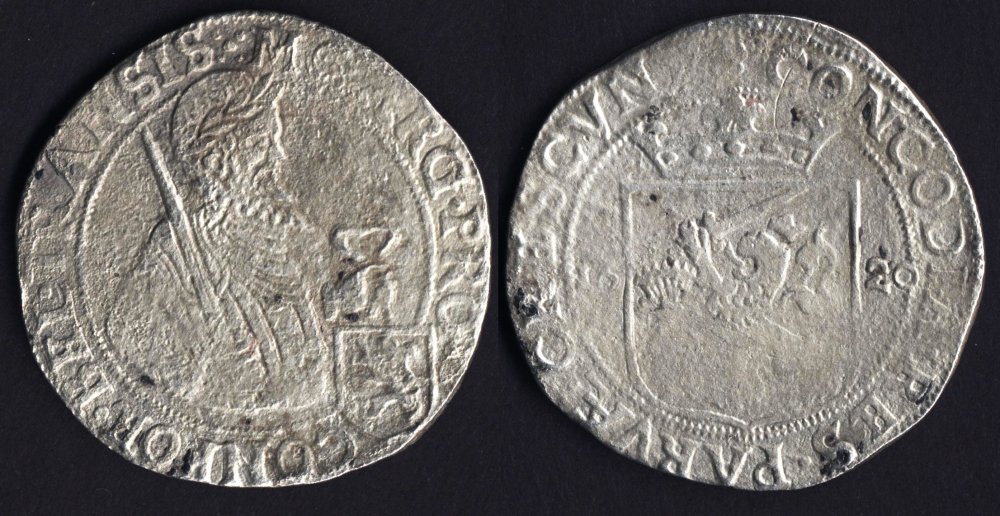
Half
Rijksdaalder, this particular one, minted in Overijssel
province, actually comes from a Batavia shipwreck.
In
September 1628 Dutch admiral Hein captured the whole “ New
Spain Flotilla” near Havana and took home to Holland a vast quantity of
silver.
That’s
why the next Dutch shipwreck in Western Australia, Vergulde
Draeck or Gilded Dragon did carry almost entirely only Spanish silver.
By
contrast, the Zuiddorp (meaning 'South town') in 1712 vas
loaded by Dutch coins and here comes the new one, Ducaton.

In
1659 the Dutch states started production of the 'silver rider'
Ducaton, featuring a mounted knight on horseback. This design weighing
32.779
grams of 0.941 silver also featured the crowned arms of the United
Netherlands
on the reverse, with a shield below the knight indicating the province
of
minting. Rider ducatons were minted until 1798. In the period 1726-1751
Ducatons
were minted bearing the monogram of the Dutch East India Company.
As
a trade coin, the familiar design of the Dutch rider helped it
to compete against well-known world coins such as the Spanish dollar.
It was
valued at 60 stuivers.
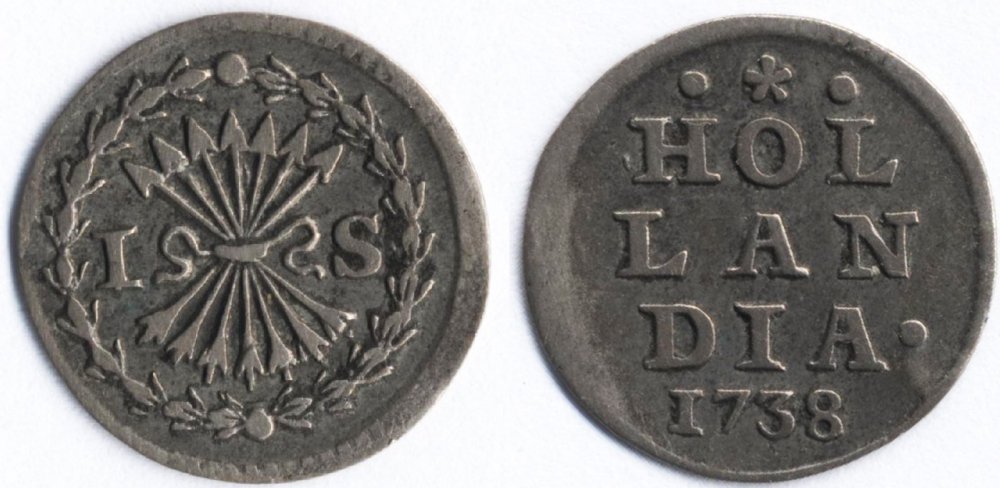
Speaking
about stuivers, small silver coins, here is the one
stuiver from Holland province, Dutch used to call it Bezemstuiver which
means
broom.

This
coin really puzzled me for a while, so called Arendschelling
of city of Zwolle, with title of Rudolf II, minted in 1601. Dutch
republic was
in the war with Spain at that time, so what is the Spanish coat of arms
doing on
the reverse? It is known that in 1590 mint master Balthasar Wijntgens
asked the
city of Zwolle for permission to mint ducats and double ducats of the
Spanish
type. Imitations of the Spanish so-called excellente and double
excellente. The
city first wanted to have the arms of Zwolle on the reverse, but by the
opinion
of Wijntgens this would have bad influence on the acceptation of these
coins in
international business. The more it looked like the original Spanish
types, the
better it would be. Because at the times when Dutch republic was
created,
nobody believed that a country which is not governed by the king or
church can be
taken too seriously. On 2nd september 1592 the city of Zwolle gave
permission
to Wijntgens to produce ducats with the Spanish coat of arms. So only
for
commercial reasons.
As
we can see, quite a lot of Dutch coins have been in Australia even
before the
English settlement.

And
then, the first fleet arrives.
We
know from the historic records, that Captain Arthur Phillip was given
by
The
Treasury some cash to buy supplies on the way to Botany Bay and it was
golden
Dutch Ducats.

The
very first Dutch Ducat of 23 2/3 karat or 0.986 gold was minted in 1586
shortly
after the seven Dutch provinces declared independence from Philip II.
of
Spain.
Let’s
have look on the classic design:
On
the obverse, because Netherlands were republic, there is no head of the
King
but anonymous knight holding a sword and seven arrows representing the
seven
united provinces. Date and legend around:
“CONCORDIA
RES PARvae CREScunt”
Loosely
translated:
“Unity makes small things
grow”, followed by a
short legend indicating the province where the Ducat was minted, in
this case
Zeeland province.
The
reverse shows the shortened legend which reads:
“MOneta
ORDinum PROVINciarum FOEDERatorum BELGicarum AD LEGem IMPerii”
Loosely
translated:
“Money
of the United Provinces of Belgium in accordance with the law of the
imperium”.
Belgium
is an old Latin name for all Netherlands or Low countries, not only for
the
Kingdom of Belgium
The
golden Ducats were minted in all provinces (except Groningen) and also
in the
Hanseatic cities like Dordrecht, Zwolle and Kampen.
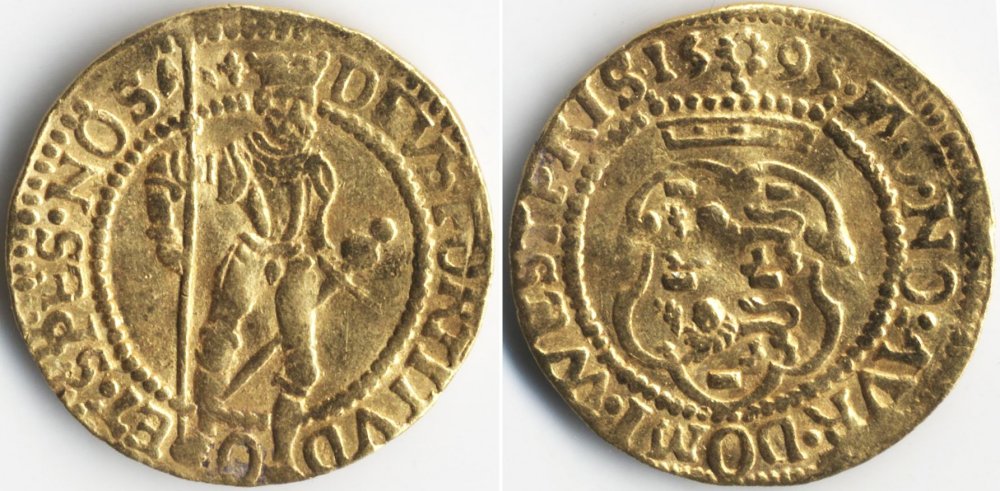
A
little bit different design has this Ducat 1595 from West
Friesland, so called Hungarian type. Historical region of West
Friesland is
often mistakenly connected with Friesland province which is actually
across the
water. In fact, West Friesland was part of Holland province but with
some
degree of autonomy.

Utrecht
province 1596, the legend for Utrecht is TRA or TRAI as
short for Latin Trajectum.
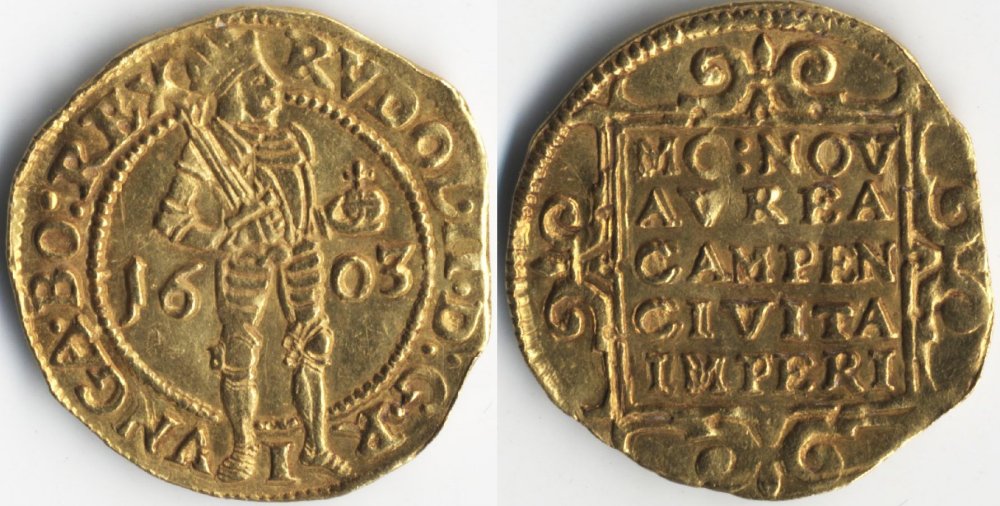
Again
a little bit different design has Ducat
from City of
Kampen 1603, with title of Rudolf II.
Cities like Kampen, Dordrecht and Zwolle were members of
Hanseatic
League and because they had some privileges granted them by the Holy
Roman Emperor,
they often included emperor of the day on their coins.
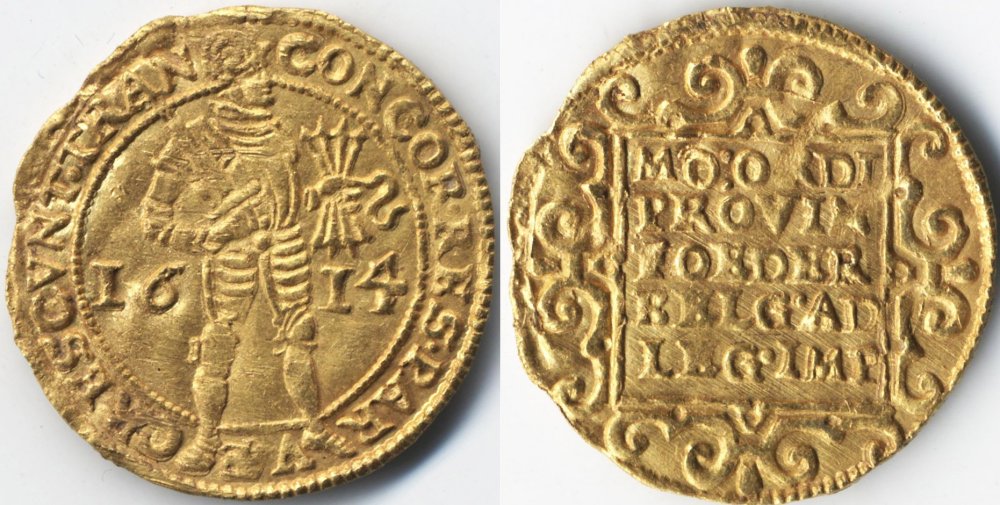
Overijssel
province 1614, the legend for Overijssel is TRAN, short
for Transisalania
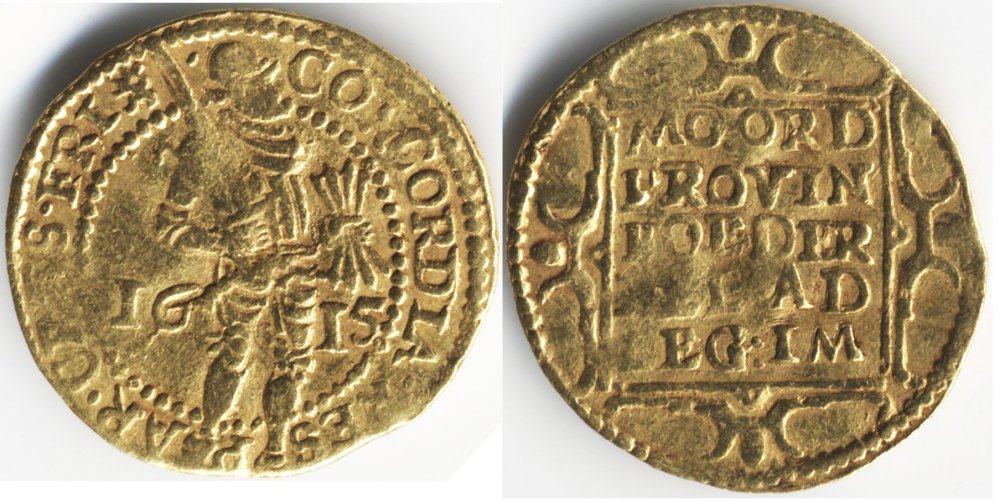
Friesland
province 1615, the legend is FRI

Gelderland
province 1636, the older type, the legend is GEL
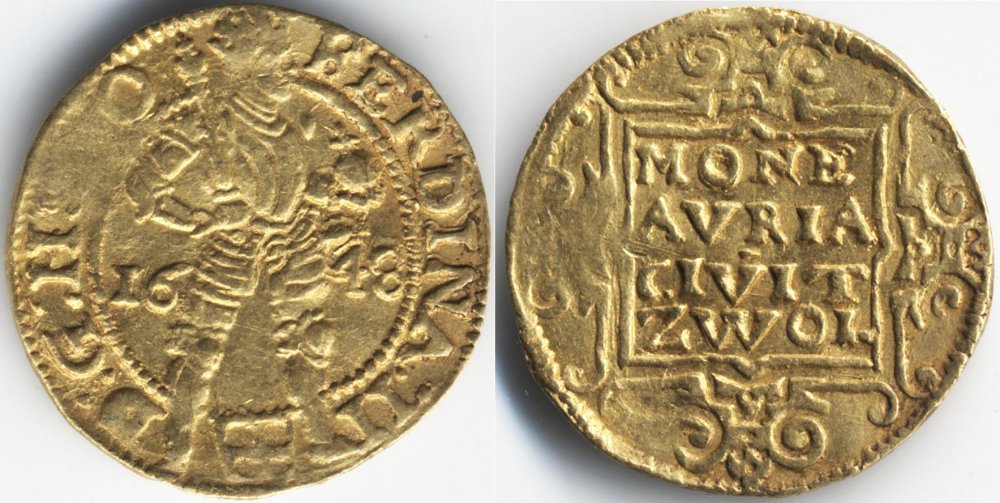
City
of Zwolle with title of Emperor Ferdinand II.
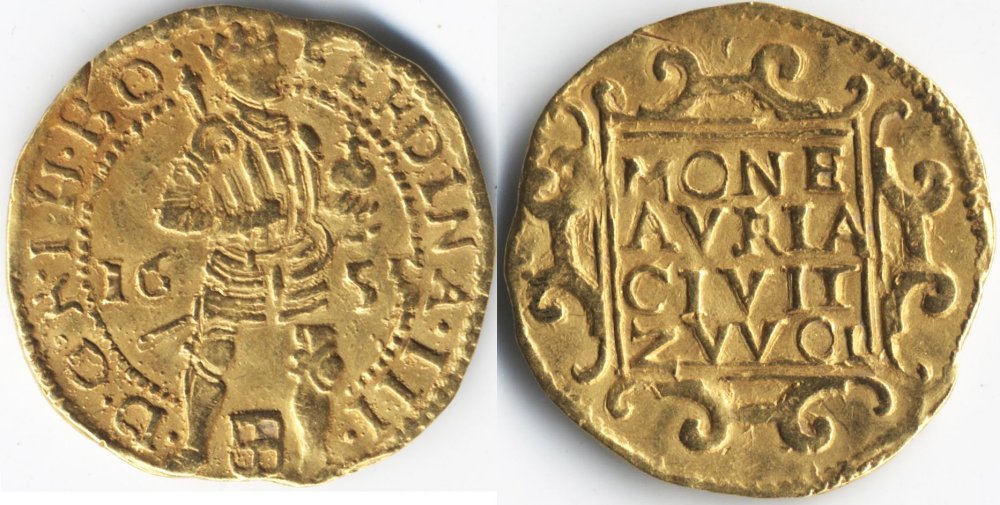
Another
Ducat from city of Zwolle, this time with title of Ferdinand III.
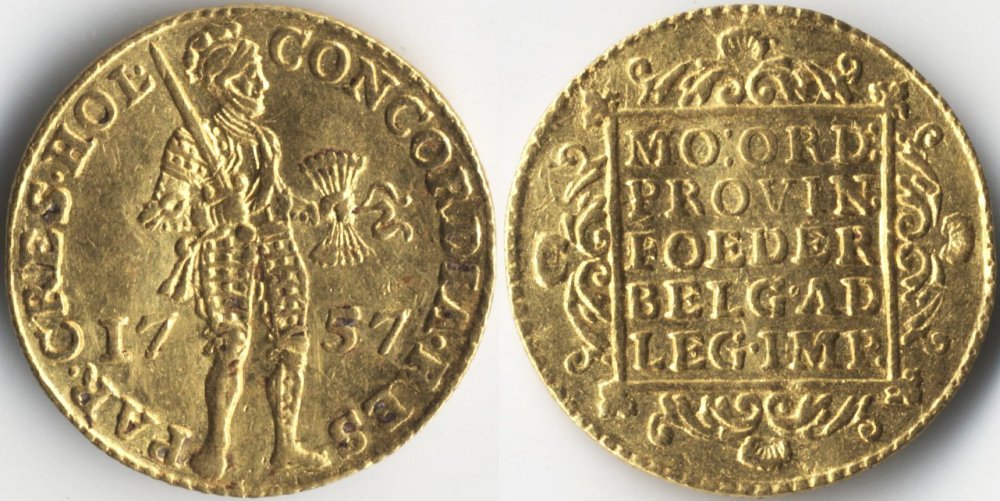
Holland
province 1757, the legend is HOL

One
more from Gelderland, this time the newer design. After the year 1708
was the
legend GEL replaced with D.G.&.C.Z. meaning
Duchy of Gelderland and the County of Zutphen.
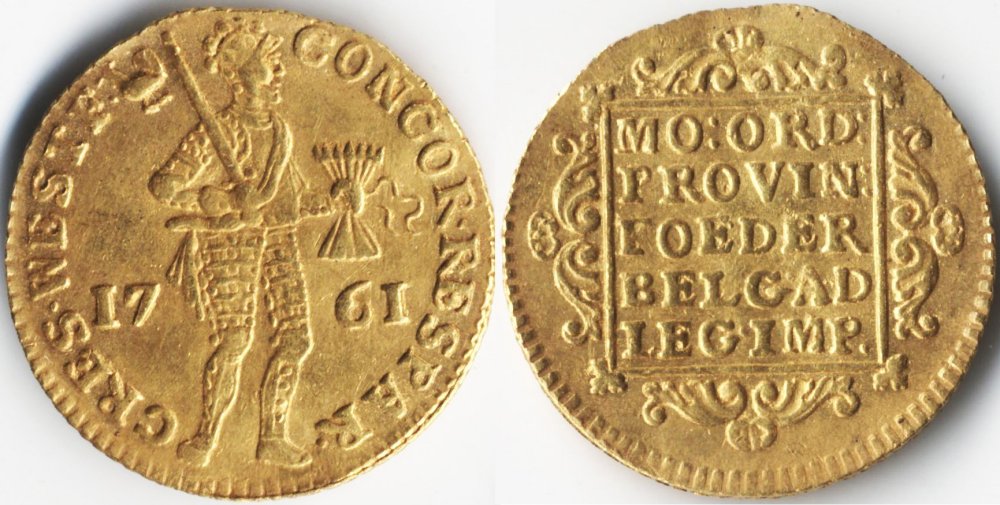
West
Friesland 1761, the newer design, with a nice mintmark of Hoorn mint,
the
rooster.
In
mid December 1790 the Dutch ship Waaksamheys arrived in Sydney Cove
carrying some
provisions from Batavia for the starving colony and it started a slow
but steady
infiltration of Dutch coins into NSW.

It
could be Leeuwendaalder or Lion Dollar, coin minted from 1575 mainly
for
foreign trade. The lion dollar circulated through the Middle East and
was
imitated in several German and Italian cities. It was also popular in
the Dutch
East Indies as well as in the Dutch New Netherlands Colony (today’s New
York) and
also circulated through the English colonies during the Seventeenth and
early
Eighteenth centuries. Examples circulating in the colonies were usually
fairly
well worn so that the design was not fully recognisable, for this and
also for
the lower silver contents they were sometimes referred to as "dog
dollars."

Or
perhaps these two, six stuivers with beautiful sailing ship or 10
stuivers
alias half gulden.
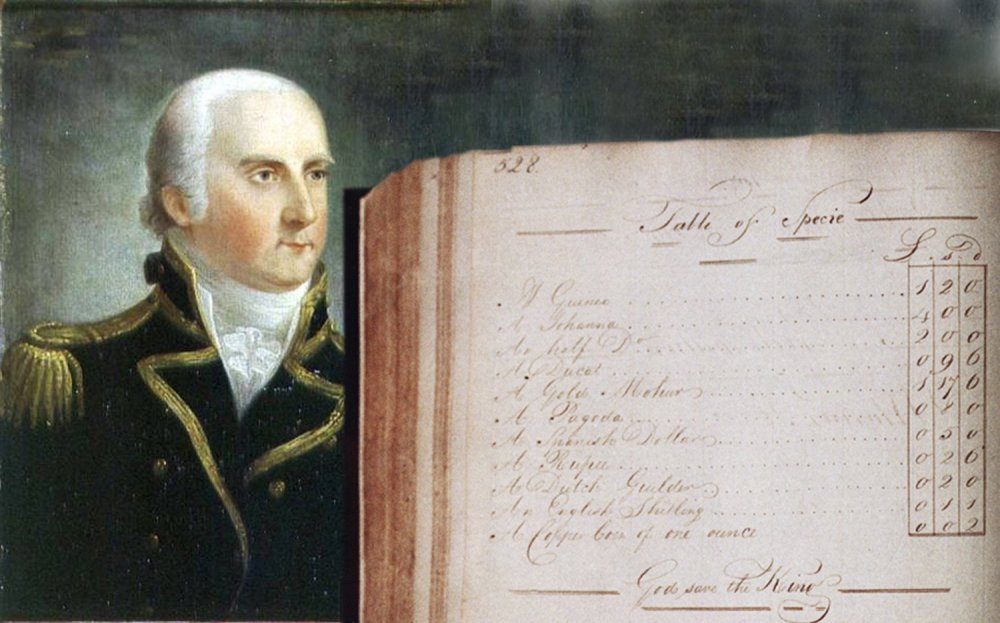
And
what can we see? Two Dutch coins are becoming to be part of the
official
currency of New South Wales colony, number 4 is the golden Ducat and
number 9
is the silver Gulden (Guilder)

The
first gulden, a 10.61g in .910 silver, was minted by the States of
Holland and
West Friesland in 1680. The original Gulden design featured Pallas
Athena
standing, holding a spear topped by a liberty cup in her right hand,
resting
her left hand on the book Gospels. Gulden was divided into 20 stuivers,
each of
8 duits. The gulden gradually replaced other silver coin denominations
circulating in the United Netherlands - florijn (28 stuivers), daalder
(1½
guldens or 30 stuivers), rijksdaalder (2½ guldens or 50
stuivers), silver ducat
(2½ guldens or 50 stuivers) and the silver rider ducaton (3
guldens or 60
stuivers). Gulden was minted until 2002, when it was replaced by the
Euro.
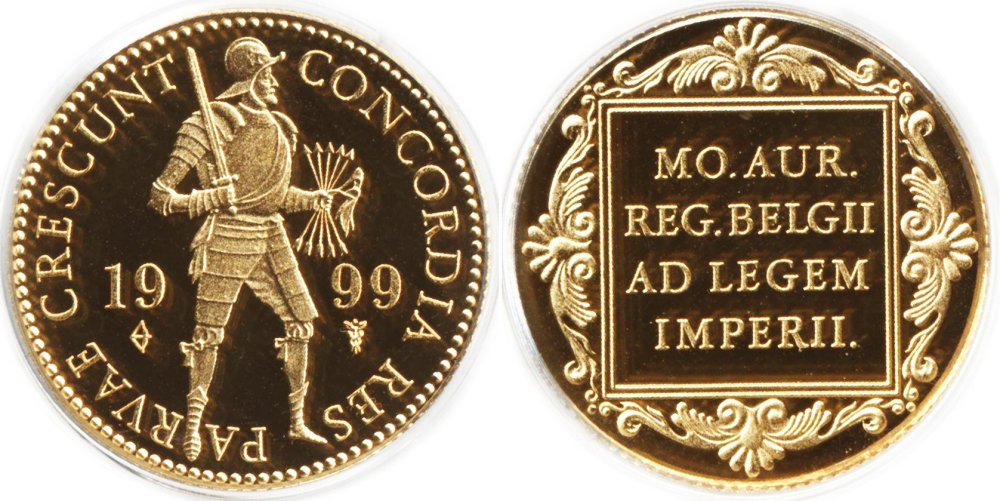
And
this is the last coin from my display, seemingly out of content.
Ducat
minted by Dutch Royal mint in 1999. As you can see, design didn’t
change much
in last 413 years.
It’s
still a very beautiful coin with the great appeal for collectors all
around the
world including Australia.